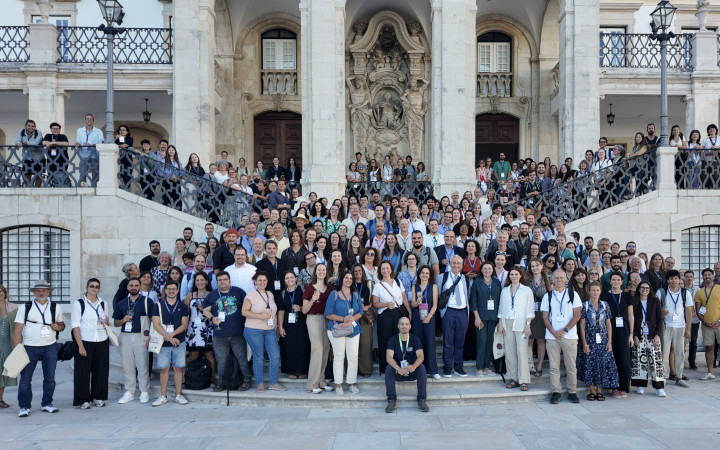
On 24 April 2026, our Hungarian partner iASK held its last Soil Week event to discuss the position paper on soil protection issued by the Hungarian Ombudsman for Future Generations in 2016 in relation to the goals of the Soil Mission. The event brought together 55 participants, with 29 people attending in person and 26 joining online.
The organisers reached out to a wide range of stakeholders, including members of the scientific committee who helped create the position paper, the Hungarian Soil Science Society, and various local researchers. This resulted in a diverse group with representatives from agriculture, environment, forestry, urban planning, and nature conservation sectors. High-level attendees included both past and present Hungarian Ombudsmen for Future Generations, a judge from the Constitutional Court, a civil servant from the Office of the Prosecutor General, and university professors.
The workshop covered several themes regarding land health, starting with the future of soil monitoring. Participants agreed that tracking soil conditions is not the ultimate goal, but rather an essential tool to guide decision-making. There is a clear need to upgrade the current monitoring system so that it can provide solid data to help prevent and reduce pressures on soil health across different types of land use.
Experts noted that different management methods for both farming and urban spaces must be analysed when looking at the drivers behind soil health. This comparison is necessary to identify what motivates people to preserve the land and how to reverse negative effects on the environment.
Policy and planning issues were also discussed. It was noted that many people do not understand why the current rules are not working well enough. Because of this, there is a call for a review of existing regulations. The goal would be to find the root causes of why laws are not being properly enforced, while keeping local social and economic needs in mind.
The discussion then turned to natural soil processes, where participants highlighted that general public awareness about underground life is still very low. Therefore, researchers need to better explain how tiny soil organisms keep the land functioning and investigate how different types of farming and building affect soil habitats.
Finally, the workshop concluded with a look at future research requirements. It was highlighted that there is not enough practical field experience available yet. During the concluding remarks, it was stressed that scientists need to evaluate the real-world data collected by farmers. To achieve long-term success, it was recommended to build better communication platforms that connect scientists, policymakers, and land managers so that everyone can work together to protect the land.