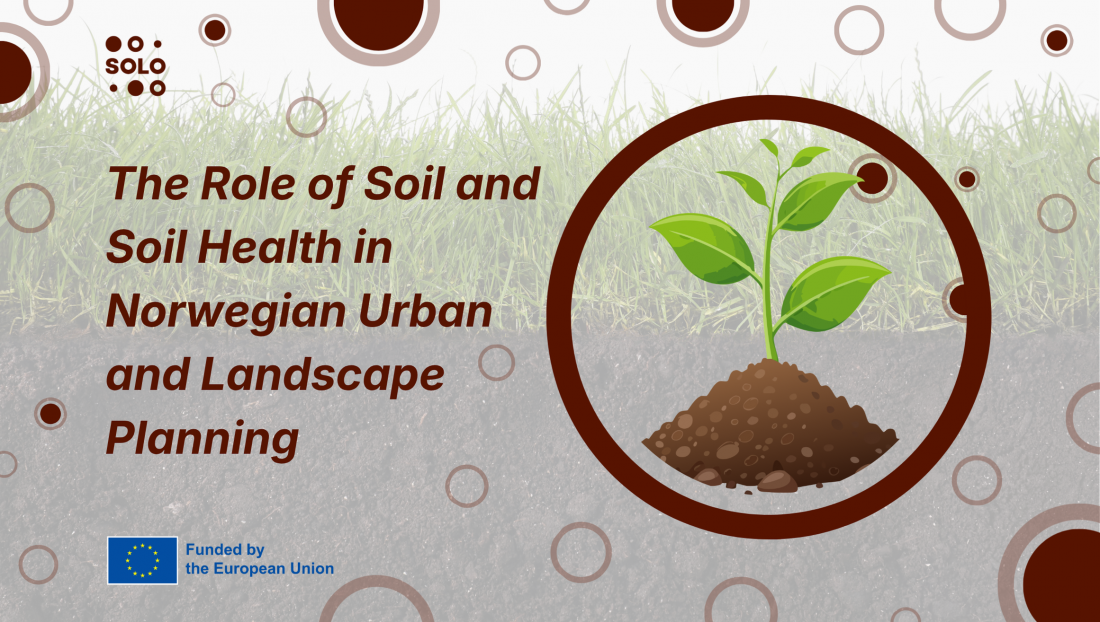
On April 21, the Norwegian University of Life Sciences (NMBU) hosted its online Soil Week event on the role of soil and soil health in Norwegian urban and landscape planning. The webinar gathered a group of scientists, public road officials, and property developers to discuss how urban soils are managed. It was noted that while Norway has strong laws for agricultural land, the soil within its cities remains a largely unrecognised resource in the context of climate change and urban development.
Another key point of the session was that urban soils are currently treated as "dead" material rather than living systems. Participants agreed that these soils are often unnecessarily excavated and replaced because their value in water regulation, biodiversity, and carbon storage is not monitored or understood. Unlike chemical contamination, other soil health indicators are almost absent from current urban planning practices.
During the webinar, it was also highlighted that there is a significant gap between scientific knowledge and professional practice. There is currently a lack of a shared language between soil scientists and the landscape architects and engineers. As a result, the creation of Living Labs, where municipalities and researchers can work together, was suggested.
Another challenge is the integration of soil health into national policy. At the moment, soil ecosystem services rarely lead to binding legal actions in the way that protected species do, for example. Integrating the relevance of soil health with existing climate adaptation and stormwater management policies was identified as essential.
What shall the next step be?
The development of a national framework for monitoring urban soil health for scientists, but also for planners, must be prioritised. It is of utmost importance to explicitly integrate soil requirements into planning legislation and municipal Geographic Information Systems. Furthermore, research must move beyond the laboratory and into the field, focusing on interdisciplinary pilot projects that show the practical and economic benefits of preserving soil in the country’s growing cities.