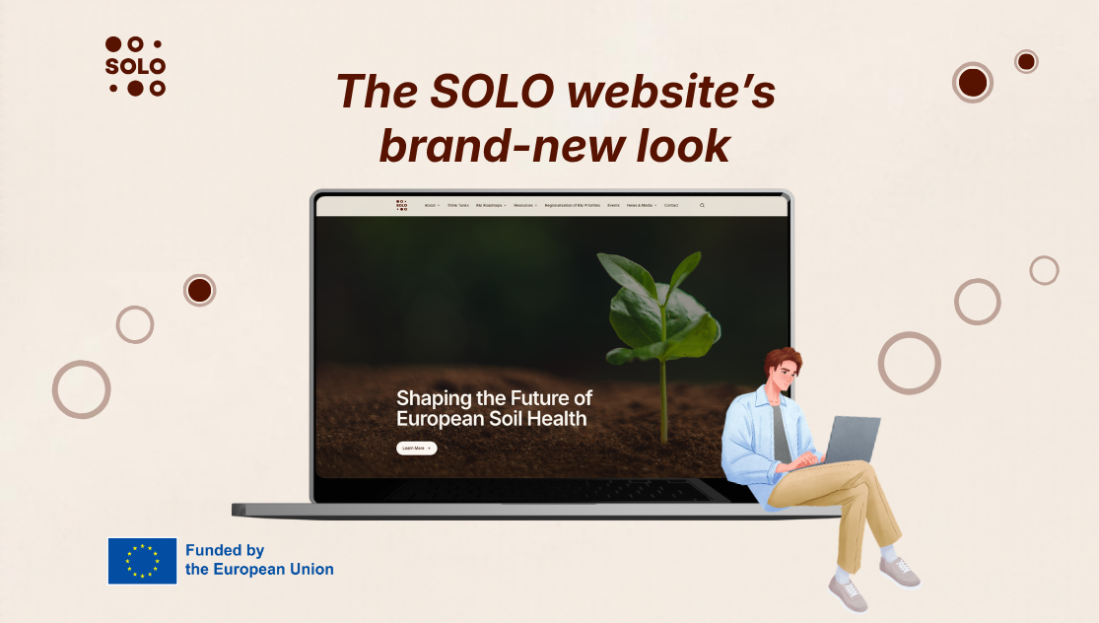
The SOLO project has officially launched its website redesign, together with a brand-new page dedicated to the Regionalisation of Research and Innovation (R&I) Priorities. The page gathers the outcomes of the project's Regional Nodes and Soil Weeks in one place, centred around an interactive map of Europe.
The redesigned website makes it easier for farmers, researchers, policymakers and anyone interested in soil health to find their way around SOLO's work. The navigation makes it more intuitive for visitors to find what is most relevant to them.
Since 2023, SOLO's Regional Nodes and Soil Weeks have brought together stakeholders in 12 countries to discuss the soil challenges that matter most in their regions. The new page explains what Regional Nodes and Soil Weeks are and brings the recaps of all these events together in one visual overview you can explore at a glance.
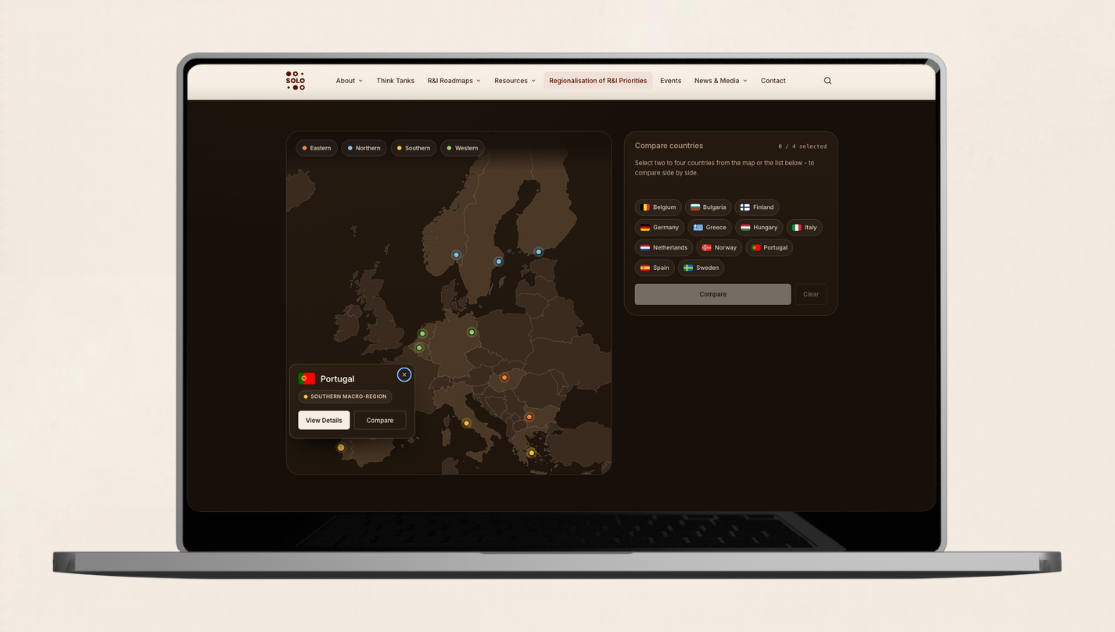
At its heart is an interactive map showing where each Regional Node and Soil Week took place. Click on a location to see:
the Priority Mission Objective addressed, one of the eight objectives of the EU Mission "A Soil Deal for Europe";
the number of knowledge gaps identified, meaning the questions science has yet to answer for that region;
the typology of stakeholders involved, from farmers and land managers to researchers and policymakers;
the type of the event - be it a seminar, workshop, webinar, etc.;
the number of participants, and more.
The map also lets you compare events from different countries. Simply select up to four countries and click “Compare” to see all their details side by side, making it easy to spot similarities and differences.
Together, these entries show how soil priorities differ from one part of Europe to another, and where they overlap.
Thank you to our growing soil community!
The official launch of the website redesign coincides with another milestone:
SOLO's LinkedIn page has now reached 5,000 followers. We are grateful to everyone who follows, shares, and joins the conversation on soil health, and to our partners, Regional Nodes and Soil Weeks participants and hosts, whose contributions made the development of the Regionalisation webpage necessary and possible.